
SMS Broadcast
Optimise Your SMS Delivery with a Reliable Broadcast System
In the digital age, rapid communication is key. Our SMS Broadcast service enables efficient mass messaging without overloading the SMSC, ideal for promotions, notifications, and even emergency alerts. A reliable solution to stay connected with your audience.


SMS services have become very popular among mobile phone users today. Starting with the popularity of GSM networks in various countries, the SMS feature, which was originally intended as an addition to GSM services, has become one of the main means of communication in many countries, including Indonesia. One of the roles of SMS is as a medium for announcements and offers.
Currently, SMS services have become one of the main services that provide a significant source of income for operators. The popularity of SMS among the general public has led to more and more other services being offered using SMS as a medium. One example is broadcast SMS for announcements and notifications, broadcast SMS for product offers, etc. SMS is a cheap, effective, and efficient means of advertising.
With the increasing demand for SMS messaging, mobile operators as network providers must keep pace by improving the capacity and capabilities of their SMSCs to handle this demand. If an SMSC cannot handle large volumes of SMS transmissions, the SMS messages sent will not be received by customers. This will certainly cause losses for both the operator and the content owner.
Therefore, it is important for GSM/CDMA operators to have a specialised system capable of handling broadcast SMS. This ensures that broadcast SMS messages reach customers quickly and accurately.
TEL-ACCESS SMS BROADCAST
Tel-Access provides SMS Broadcast solutions that assist GSM/CDMA operators in sending broadcast SMS messages to their customers quickly and reliably.
Tel-Access SMS Broadcast is a service aimed at content providers and mobile operators for sending bulk SMS messages to mobile service users, including notification SMS, advertising SMS, bulk SMS, and others.
Using the operator’s existing SMSC to broadcast SMS messages will increase SMSC traffic, which is already busy handling end-to-end SMS traffic. This will have an impact on SMS services. In this case, the Tel-Access SMS Broadcast server will replace the existing SMSC, whose function is specifically for SMS broadcasting, so that it does not interfere with the performance of the existing SMSC and SMS messages can still be delivered to mobile service users. SMS delivery, which previously had to go through the SMSC, can now be diverted through the Tel-Access SMS Broadcast Server. This reduces the workload on the SMSC, especially during peak SMS delivery times, such as religious holidays, New Year’s Eve, and so on.
In its implementation, content providers or mobile operators can prepare the SMS narrative to be broadcast and enter the destination numbers through the web interface provided. The SMS is then broadcast by the Tel-Access SMS Broadcast system, which is connected to the operator’s mobile network.
Tel-Access SMS Broadcast Architecture
Tel-Access SMS Broadcast consists of several interconnected and interdependent applications.
Media Interface Server
The Media Interface Server is an SMS interface between the database and the client. These interfaces include GSM, CDMA, PSTN, and SMPP.
Media Management Server
The Media Management Server is a means of managing and processing SMS messages to be broadcast. SMS messages from the Media Management Server are forwarded to the Media Interface Server for broadcasting.
Common Message Database
The Common Message Database is a means of storing data records related to activities carried out by the Tel-Access SMS Broadcast system.
Tel-Access SMS Broadcast processes SMS messages to be broadcast on the media management server and then sends them to various Media Interface Servers (GSM, CDMA, PSTN, and SMPP) as intended.
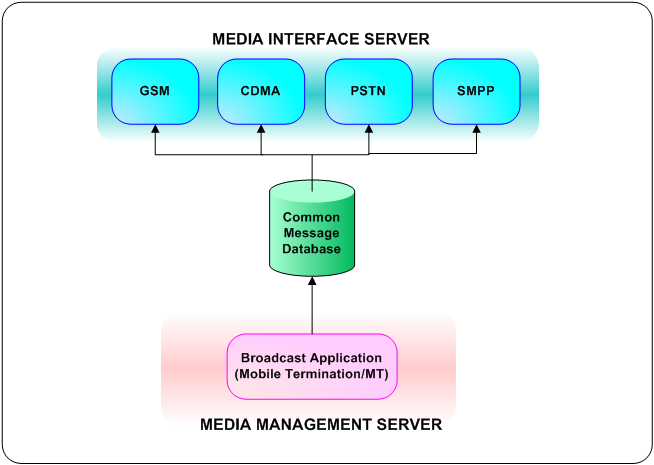
Tel-Access SMS Broadcast Configuration
Overview of the Tel-Access SMS Broadcast system configuration directly connected to the GSM/CDMA network
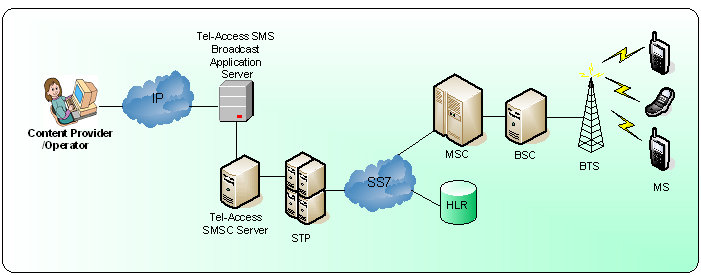
How Tel-Access SMS Broadcast Works
1. The Content Provider or Operator creates the SMS to be broadcast and enters the customer numbers on the Tel-Access SMS Broadcast web interface provided.
2. The Content Provider or Operator sends the SMS to the Tel-Access SMS Broadcast server via the internet/intranet network.
3. The SMS is then processed by the Tel-Access SMS Broadcast server.
4. The processed SMS is then sent to mobile service customers via the mobile network.
Tel-Access SMS Broadcast Feature
Personalized Sender Info
SMS Broadcast via Tel-Access SMS Solution Server is equipped with Personalised Sender Info. Text Sender Info can be customised as desired, for example as the sender’s brand or company name. Text Sender Info is an effective tool for marketing and campaign activities for companies or political parties, as it will be sent to millions of mobile service users. This feature is designed with the primary objective of increasing the trust and attention of mobile customers as SMS recipients, as the sender info received on their mobile phones is text-based.
Now or Never SMS
Without using the Tel-Access SMS Broadcast System, if there is a failure in sending SMS, the existing SMSC on the operator’s network, which is generally set to standard, will continue to send the SMS until it is received by the mobile service user, thus greatly burdening the SMSC’s performance. The Tel-Access SMS Broadcast System can help the SMSC overcome this problem by setting Now or Never SMS. Now or Never SMS is a feature whereby if an SMS delivery failure occurs due to certain reasons (customer outside the service area, inactive, etc.), the SMS will not be resent. This method will reduce the workload on the SMS server.
Flash SMS or Normal SMS
Without using the Tel-Access SMS Broadcast System, if there is a failure in sending SMS, the existing SMSC on the operator’s network, which is generally set to standard, will continue to send the SMS until it is received by the mobile service user, thus greatly burdening the SMSC’s performance. The Tel-Access SMS Broadcast System can help the SMSC overcome this problem by setting Now or Never SMS. Now or Never SMS is a feature whereby if an SMS delivery failure occurs due to certain reasons (customer outside the service area, inactive, etc.), the SMS will not be resent. This method will reduce the workload on the SMS server.
Tel-Access SMS Broadcast can configure Flash SMS, which is an SMS that disappears after being read, or Normal SMS, which can be saved. Flash SMS is very useful when used for SMS delivery categories that prioritise mobile customer convenience.
Single SMS Transmission
Single SMS Transmission is the sending of an SMS to only one mobile customer.
Multiple Destination SMS Transmission
Multiple Destination SMS Transmission is the sending of SMS messages to multiple mobile customers.
Bulk SMS Transmission
Bulk SMS Transmission is the sending of bulk SMS messages to many mobile customers.
Per-user Customizable Transmission
Per-user Customisable Transmission Limit serves to limit the number of SMS messages sent per user.
Customizable Source Address
Customisable Source Address gives users the right to change the sender name displayed on SMS messages. For example: Tel-Access, SBY, etc.
Daily Transmission Report
Daily reports contain information on SMS messages sent by content providers or operators.
Customizable Source Address
A white list is a list of SMS destination numbers that will receive SMS messages from content providers or operators.
Web Interfaces for Administrators and Users
Our SMS Broadcast service is equipped with a Web Interface that facilitates user management and message delivery. Administrators have full control to add, manage, and delete users, manage privileges, and compile white lists and black lists. Meanwhile, users can send SMS messages, receive daily reports, and manage blacklists. With this system, SMS management becomes more efficient, secure, and structured.
WORKFLOW SMS BROADCAST MANAGEMENT SYSTEM
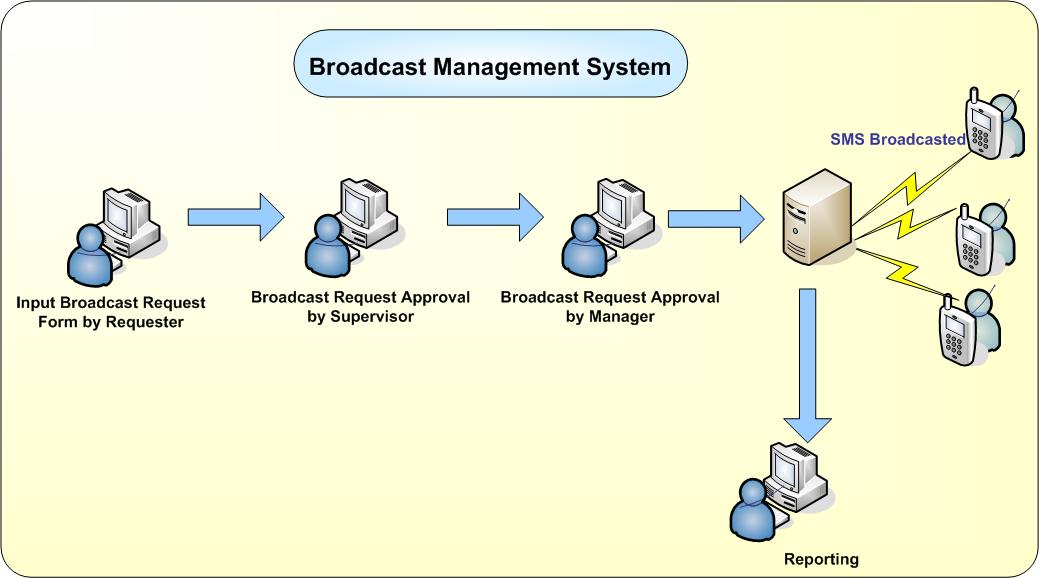
Tel-Access SMS Broadcast is equipped with a Management System that supports SMS broadcast services. The Management System is used to facilitate the automation of SMS Broadcast activities using a Web Interface.
User Maintenance and Privilege
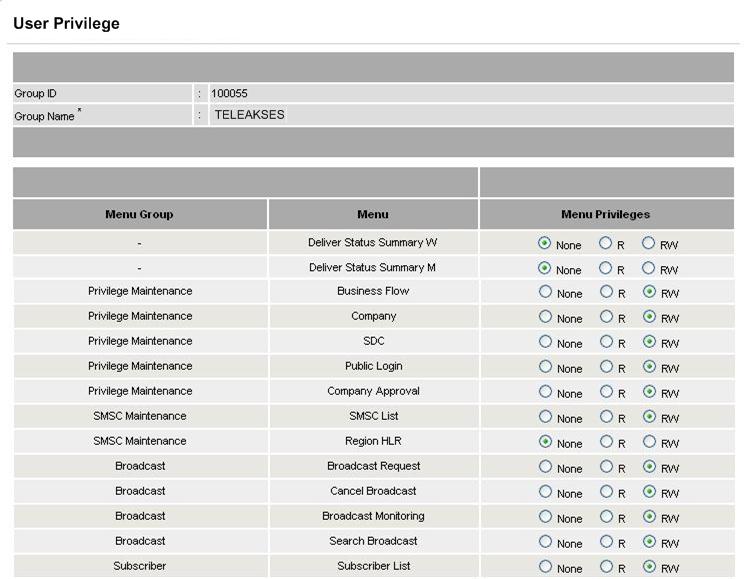
User Maintenance and Privileges are used to manage user accounts and determine the access rights of users who log in to the Web SMS Broadcast application. Settings for Web SMS Broadcast application user accounts include registering/deleting Web SMS Broadcast application users and changing user passwords. User access rights are set by the administrator. The administrator sets each user’s access rights to the menus in the Web SMS Broadcast application.
Configurable Business Flow with approval
Business flow is used as a reference in implementing online broadcast approval procedures. Business flow can be configured in accordance with applicable business processes. Online approval makes it easier for users to evaluate broadcast requests anytime, anywhere.
System and Performance Report
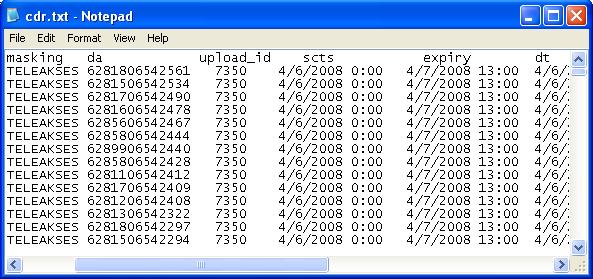
The SMS Broadcast web application provides comprehensive reports in both table and graph formats, such as detailed reports, summary reports, peak traffic performance reports, and others. It also comes with log files that make it easy for users to obtain records of activities performed by both users and the system.
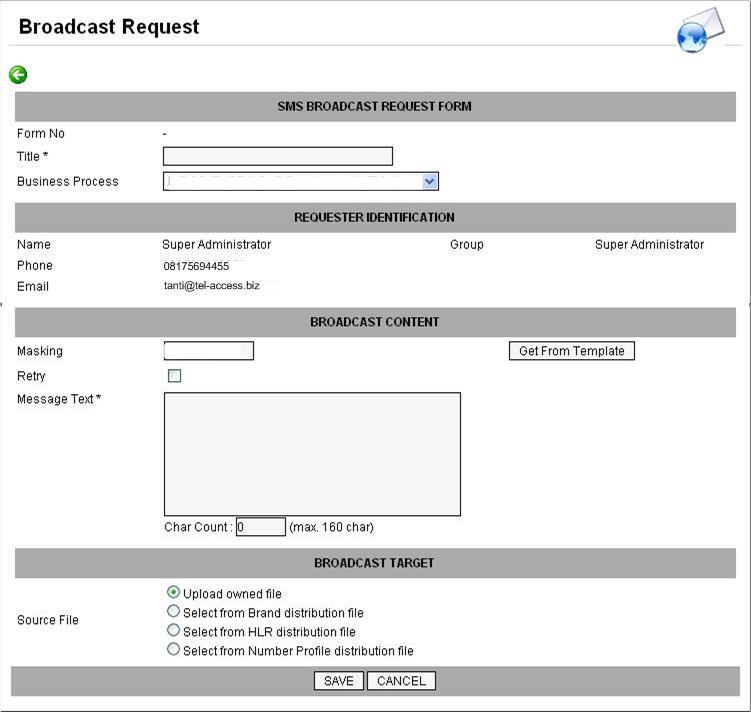
User Friendly Broadcasting Request Interface
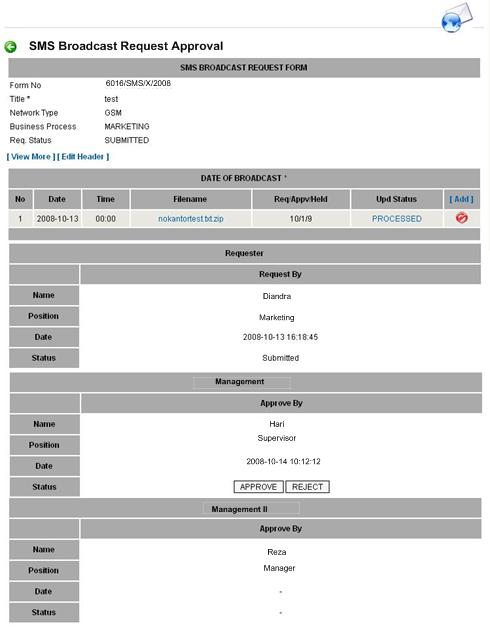
Broadcasting Request Interface is a feature that makes it easy for users to make broadcast requests. Users are required to complete the Broadcast Request form to continue the broadcast process. The online broadcast request form allows users to easily carry out the broadcast process at any time.
Subscriber Maintenance Including Blacklist and Whitelist
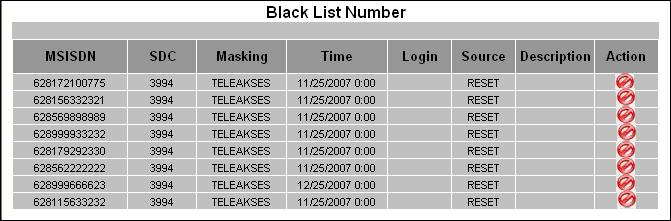
Subscriber Maintenance Whitelist is a feature that makes it easy for users to manage subscriber numbers that are permitted to receive SMS messages from content providers or operators. Conversely, Subscriber Maintenance Blacklist is used to manage subscriber numbers that are not permitted to receive SMS messages from content providers or operators.
WEB BROADCAST (PUBLIC INTERFACE)
Tel-Access SMS Broadcast is also equipped with Web Broadcast (Public Interface). This Web Broadcast is intended for public users, which is used to facilitate the automation of SMS Broadcast activities using a more attractive Web Interface.
Tel-Access Web Broadcast (Public Interface) consists of the following features

Send SMS
Send SMS is a feature that makes it easy for users to send SMS messages. SMS messages can be sent to multiple destinations, either manually (entered one by one) or in bulk (by uploading a file), supported by a more user-friendly interface that makes it easy for novice users to use.

Schedule SMS
Not only does it send SMS messages, but Web Broadcast also supports an SMS Scheduling feature that makes it easy for users to schedule SMS deliveries. With this feature, users can schedule SMS deliveries at any time they wish. Scheduling is done online, so it can be done anytime, anywhere.

Status Delivery Report
Web Broadcast (Public Interface) is also equipped with a Delivery Status Report. This feature makes it easy for users to obtain reports directly regarding the status of broadcast delivery. By accessing this feature, users can obtain the reports they want without having to go through other related parties.

Inbox
Inbox is a feature that can be used to store messages received from senders via short numbers or SDC numbers owned by the company. By accessing this menu, users can view messages received via SDC numbers.

Custom Interface
In addition to the features mentioned above, Web Broadcast (Public Interface) can be customised according to your needs.
ALTERNATIVE BROADCAST REQUEST
Tel-Access SMS Broadcast is also equipped with various broadcast delivery methods, such as broadcast by SMS, broadcast by SCP/FTP, and broadcast by API.
The broadcast delivery methods available on Tel-Access consist of several broadcast delivery alternatives, as follows
Broadcast by SMS
- SMS Broadcasts are sent to ad-hoc target groups.
- SMS Broadcasts are sent to target groups based on a schedule determined by the requester.
Broadcast by SCP/FTP
Broadcast by SCP/FTP is a broadcast transmission carried out by placing files on an SMS Broadcast Server via the SCP/FTP protocol. Broadcast transmission by SCP/FTP has a relatively simple and fast process, making it easy to send broadcasts, for example using a host-to-host system.
Broadcast by API
Broadcast SMS dapat juga dilakukan menggunakan API yang tersedia melalui protokol HTTP/HTTPS
TEL-ACCESS SMS BROADCAST CAPACITY AND SCALABILITY
One Tel-Access SMS Broadcast server will be connected to eight signalling datalinks, enabling Tel-Access SMS Broadcast to serve up to 10 x 8 = 80 MDA per second or 288,000 MDA per hour, assuming that one signalling datalink can serve 10 MDA (Message Data Attempt) per second.
MDA capacity can be increased by adding modular hardware and software.
ADVANTAGES OF SMS BROADCAST
Tel-Access SMS Broadcast optimises its functions in broadcasting SMS messages and provides many benefits to its users.
The benefits of using Tel-Access SMS Broadcast are as follows
1. The SMS service is provided by a separate system that does not burden the operator’s SMSC in its operation. This is very important considering that this system will most likely be used to transmit a significant number of SMS messages every day, which will have an impact on the stability of SMS services between customers.
2. It has a high degree of flexibility because it can be modified according to customer needs.
3. It guarantees the delivery of SMS messages sent to mobile service customers because it is supported by the large server capacity of the Tel-Access SMS Solution (± 2 million SMS messages per day) and does not depend on queues in the SMSC, thereby increasing consumer confidence in the operator’s network. This service has the potential to increase the number of customers using the operator’s network.
4. It is an effective solution and method for marketing and campaigns for companies at a relatively lower cost and faster speed.
5. Since this system does not use SMSC for message transmission, there is no need to invest in a new SMSC system, which is relatively expensive.
6. Since there is no need for new investment in the SMSC system, this service can be introduced to the public at a minimal cost.
Glossary
CDMA (Code Division Multiple Access)
A system of multiplexing information signals in which each user can transmit information signals at the same frequency and time. In this case, each user is given an orthogonal code to distinguish each user, so that the signal for one user will appear as noise to other users.
Content Provider
A company that provides services to mobile phone users or network operators. The services offered can include games, ringtones, chat, data access, music, shopping, etc.
Datalink
A connection from one location to another for the purpose of transferring and receiving data.
E1
A European standard communication line that multiplexes 30 voice channels and 2 control channels into a single communication line. E1 lines use 256-bit frames and are transmitted at a speed of 2.084 Mbps.
GSM (Global System for Mobile communications)
A 2G wireless telephone standard based on TDMA technology for voice, data, text, and roaming services based on the principle of frequency reuse.
HLR (Home Location Register)
A unit in cellular communications that manages cellular subscribers. Information stored in the HLR includes: subscriber information, IMSI, MS ISDN number, VLR address, and subscriber information related to the incoming call routing process.
MAP
SS7 standard for roamer registration and hand-off procedures in cellular communication systems.
PSTN
A public communication system in which users are connected to each other through communication devices. A PSTN within a country or region is supported by an integrated transmission system and switching facilities, signaling processors, and other supporting system operations.
Server
A computer device that coordinates access from other computers within a network.
SMPP (Short Message Peer-to-Peer Protocol)
A protocol for exchanging SMS messages between SMS peer entities and the SMS Center. Commonly used to enable third parties (content suppliers) to send messages, such as bulk mail.
SMS (Short Message System)
Short messages sent to and from mobile phones.
SMSC (Short Message Service Center)
A device within a cellular communication provider that routes SMS or text messages between two mobile phones.